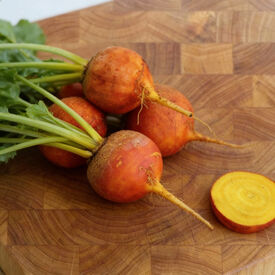
The Golden Detroit is the ultimate savory golden beet with delicious greens! A colorful beet that won over gardeners with it's sweet but more mild flavor. Golden Detroit's vibrant orange-yellow color makes a wonderful addition to salads and meals. Cooked it turns buttercup yellow and melts in your mouth. Light green, with gold veined leaves also mix well into salads. One of the best tasting raw beets that is extremely healthy.
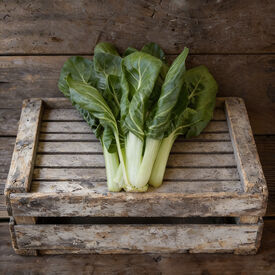
The Barese Swiss Chard is an excellent home garden chard. This variety is known for its taste and tenderness. The Barese is bred specifically for baby leaf production. This chard matures quickly, produces uniform, crisp leaves and holds well.
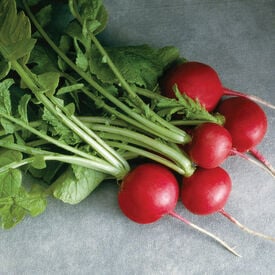
Crunchy Red produces large tops and very uniform dark red, round roots. This variety is very slow to develop pith. It performs well under cool conditions. It’s usually a few days earlier than standard varieties. Crunchy Red is desirable where larger roots are required.
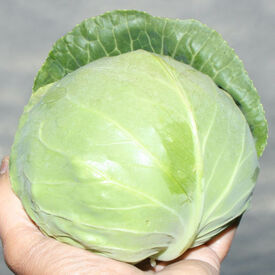
Katarina cabbage has a perfect smaller head size (4”) and shape to be grown successfully in containers on patios, decks or in-ground beds, possibly as an ornamental/edible border.
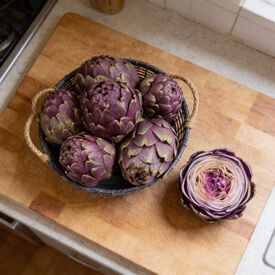
The Purple Italian Globe Artichoke, scientifically known as Cynara scolymus var. scolymus, is a stunning and delectable vegetable that has a rich history dating back to ancient times. Originating in the Mediterranean region, this particular variety of artichoke has been cultivated for centuries and is prized for both its ornamental appearance and culinary value. Its striking purple and green hues make it a unique addition to any garden or dinner table. In terms of taste, the Purple Italian Globe Artichoke boasts a mild, nutty flavor with a slightly sweet and earthy undertone. The tender inner leaves and heart are the most sought-after parts and are often used in various dishes, from salads and dips to braised or roasted preparations. The artichoke can grow to a substantial size, typically reaching diameters of 4 to 6 inches, making it a substantial vegetable for cooking. The Purple Italian Globe Artichoke is known for its longer days to maturity, typically requiring around 150 to 180 days from planting to harvest. Each plant typically yields multiple artichokes, and they can be propagated from seeds or offsets. These plants thrive in well-drained, nutrient-rich soil and prefer full sun exposure. Adequate spacing and regular watering are essential for optimal growth. Overall, this variety of artichoke offers not only a delicious addition to your culinary endeavors but also a visually striking and historical component to your garden.
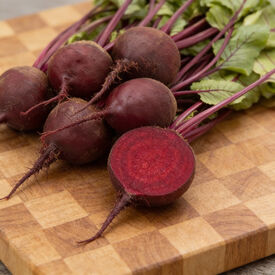
The Early Wonder beet is a popular heirloom beet plant that produces high yields of deep red roots! A popular beet that is tasty, early maturing and produces abundant greens. The beets are great for boiling, pickling, baking, and freezing. Forms 3-4" deep red globes that are sweet and tender. Also known as "Tall Top" for its tall, glossy leaves that make great greens with salads. Greens are also a great substitute for chard or spinach and have high vitamin A and C.
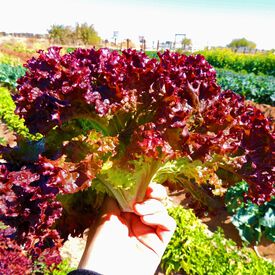
The Selway is a Lolla Rossa type lettuce with beautiful light green and dark purple coloring. This variety has deeply curled loose leaves with frilled dark-purple edges edges. The Selway is an essential in salad mixes for its color and taste. For baby leaf production, this variety can be harvested in 30 days and for full sized leaves, it can be harvested in 55 days and can be cut repeatedly!
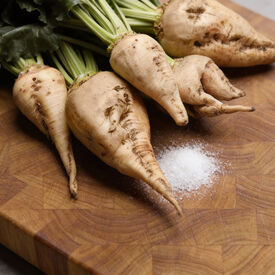
Sugar beets are the perfect natural choice to make sugar! You can boil the sugar beets in order to make a sugary syrup. These beets can grow up to 1 foot long and can weigh from 3-5 pounds. That means you need to thin them to make sure they have enough room to grow. Tops can grow 1-2' tall. Beet tops can be eaten, lightly grazed or fed to animals.
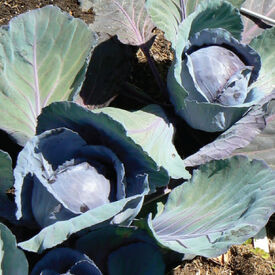
An early cabbage with a blue-green color. Produces beautiful globe-shaped heads that have a blueish color. Very good holding ability. 3-5 lb. heads produced on low, compact plants. First introduced by Harris Moran.
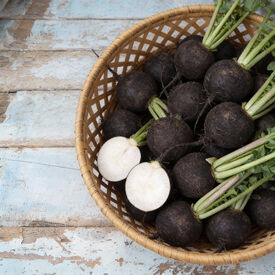
Black Spanish Round Radish is a unique black old heirloom that has a nutty and slightly spicy flavor! This black beauty radish is making a comeback! Its firm flesh holds up well in meals. The Black Spanish Round is best grown from late winter to early spring and is a healthy spring vegetable.
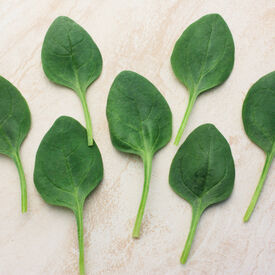
Lakeside smooth leaf spinach with dark green leaves. It has a round to oval leaf shape with an upright plant habit that makes it easy to harvest. It is a very versatile variety it can be used for baby leaf, bunch or clip.
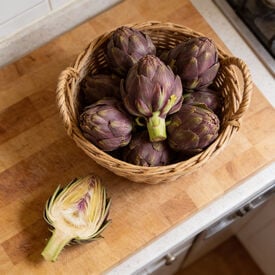
Violet is a French heirloom with fine flavor! Beautiful purple buds that are lovely on the big, ornamental plants, especially when the buds open. Rare outside Europe.
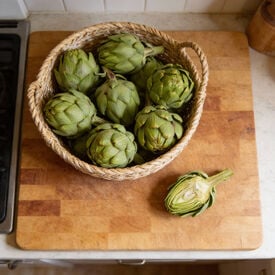
Wonder is a new artichoke variety that offers yields early and often! Plants are about 90-120cm tall, with most of the heads being pear-shaped and firm. Wonder F1 has excellent quality for both the fresh markets and for commercial use.
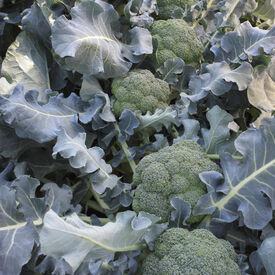
Godzilla is a new broccoli that produces very heavy and small-beaded heads. Leaf attachments are small and lower on the stem, allowing for quick trimming and easier harvest. Heads are fine-beaded and have very heavy florets.
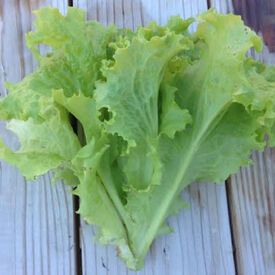
The Seafresh Lettuce was selected for its great heat tolerance! This variety is a great tasting looseleaf lettuce that thrives in hotter climates. The Seafresh Lettuce is a great addition to any garden and will definitely not be a disappointment!
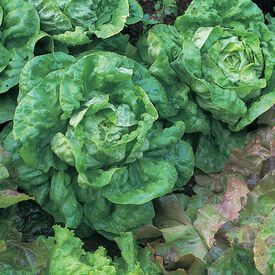
All The Year Round Lettuce is a medium-sized green headed lettuce that is just like its name, good for all the year round! This slow bolt variety is solid even in hot weather, and good for far northern areas as it is very hardy. Sow All The Year Round in spring or late summer!
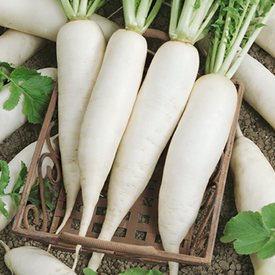
Daikon Radish has a crisp firm flesh is pure white. This Daikon radish, produces long tapered white radishes that are mostly used as winter radishes. The Minowase has a great, mild taste that is excellent in many Oriental dishes. This radish variety is great for spring or late summer planting.
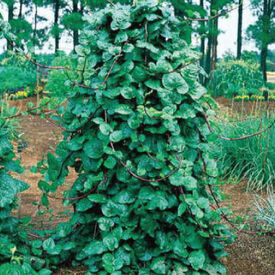
Red Malabar spinach (Basella rubra) is a heat-loving, vining green that thrives through the hottest days of summer when traditional greens fade. This vigorous Asian vine features glossy, thick, slightly savoyed dark green leaves set against striking deep red to purple stems, making it as ornamental as it is edible. The mild, chard-like flavor works well when young leaves and tender stems are used fresh in salads, blended into smoothies, or lightly cooked in stir-fries. Exceptionally tolerant of heat and humidity, it produces an abundance of nutritious greens well into fall, along with deep purple berries rich in anthocyanins that can be used as a natural dye. Not a true spinach, this beautiful plant is typically grown as an annual in cooler regions and as a perennial in subtropical climates, but it is not frost hardy.