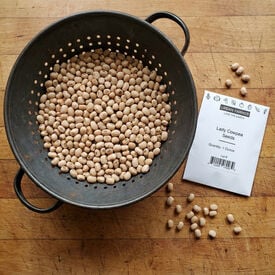
Lady is the smallest and most tender Southern cowpea on the market. This cowpea variety is a popular and hard to find southern cowpea. Lady is excellent freshly cooked and very tender. The short plants are great for small gardens, and yields are high. If you are using for Nitrogen fixation we highly recommend using a cowpea inoculant. Try with cowpea inoculant for maximum Nitrogen fixation.
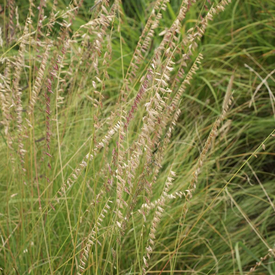
The Sideoats Grama is a warm-season bunchgrass grain variety that is easy to grow and native throughout much of North America. The ornamental and distinctive seed spikes hang from only one side of the stalk, and these make good fresh or dried cuttings. This grain prefers full sun and moderate to dry soils. The Sideoats Grama is recommended for meadow and prairie plantings, beds & borders, and as a component of forage mixes for livestock and wildlife.
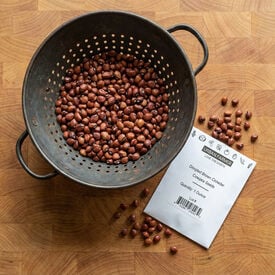
The Dimpled Brown Crowder is an excellent cowpea for canning, freezing or drying. The Dimpled Brown Crowder Cowpea is a prolific yielder with pods that contain 12-15 peas that are closely bunched together. If you are using this variety for Nitrogen fixation, we highly recommend using a cowpea inoculant. Try with cowpea inoculant for maximum Nitrogen fixation.
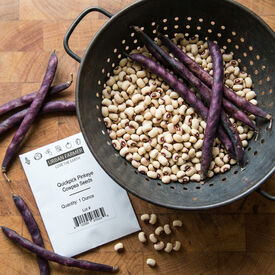
The Quickpick Pinkeye cowpea is a bush type southern cowpea with early maturity and good disease resistance. This variety is a pinkeye Purplehull type variety that is determinate, erect, compact (reach about 20 inches), and non-vining. This cowpea gets its name, Quickpick, because it matures in about 60 days. The pods are dark-purple and about seven to eight inches long containing nine to eleven, kidney-shaped seeds with large, maroon colored eyes. If you are using for Nitrogen fixation we highly recommend using a cowpea inoculant. Try with cowpea inoculant for maximum Nitrogen fixation.
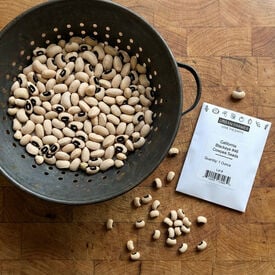
The California Blackeye #46 is similar to California Blackeye #5, but with smaller seeds. Bred by the UCLA and released in 1987. California Blackeye #46 plants are more erect than California Blackeye #5. The seeds are a typical blackeye type of Southern peas with cream-colored seed coats and black pigments around the eyes. Heavy yielder. If using for Nitrogen fixation we highly recommend using a cowpea inoculant. Try with cowpea inoculant for maximum Nitrogen fixation.
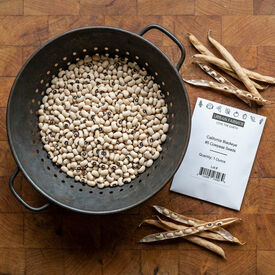
California Blackeye #5 is a high yielding, vigorous and easy to grow. You can use these as green shell peas or dry like winter beans. Pods reach 6-8" long and are loaded with creamy, delicious seeds. Does well in high heat areas. Treated Seed.
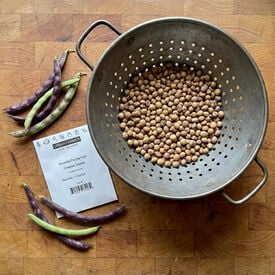
The Knuckle Purple Hull is a bush type cowpea producing heavy yields of purple pods. Cowpeas in general are great for drying and canning. This variety tends to stay off the ground and cluster making for easy picking. This cowpea is referred to as a "Knuckle Hull" because of the big, plump cowpeas. Try with cowpea inoculant for maximum Nitrogen fixation.
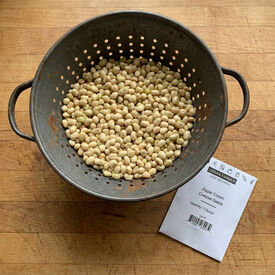
The Zipper Cream cowpeas are very easy to grow and are a tasty Southern favorite! This variety produces bushy 2-3' plants that bear heavy yields. The 6-9" large pods have large, creamy-white seeds. There are 18-20 seeds per pod. The Zipper Cream is an easy to shell cowpea. Treated Seed.

The Sadandy cowpea is a heavy yielding Southern pea great for fresh shelling. The Sadandy variety is very similarly to 'Texas Cream' but the peas are slightly smaller. These bush-type plants are prolific and thrive in hotter, Southern weather. The Sadandy is a "cream pea" type variety, they are generally used at the fresh shelling stage. If you are using for Nitrogen fixation we highly recommend using a cowpea inoculant.
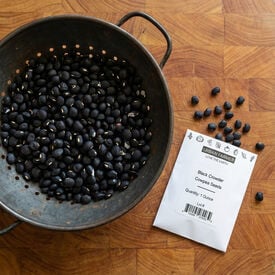
The Black Crowder cowpea is a high yielding variety of long pods. The cowpeas themselves have a deep purple color when first shelled which then turn black when dried. The Black Crowder's green pods are easy to shell. Try with cowpea inoculant for maximum Nitrogen fixation.