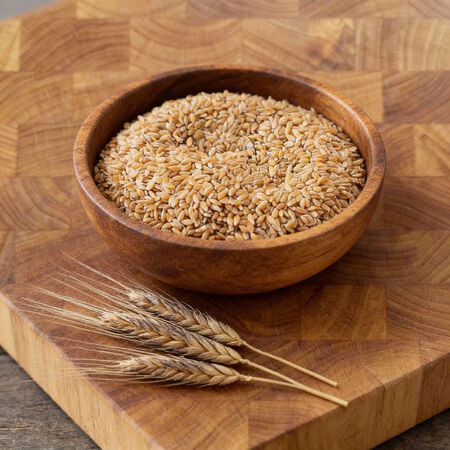
Einkorn, Wheat Seed
Key Attributes



Key Attributes
Product Details
Weight
1Depth
1Height
9Width
6Sub Type
WheatBotanical Name
Triticum monococcumSeed Type
SeedSeeds Per Gram
38Seeds Per Pound
17,200Best Time To Sow
March-OctoberSow Depth
1"Broadcast Rate Per Acre
60-120 lbs.Seeds Per Ounce
1,075Breed
Open-pollinatedSun
Full SunUses
Forage, Green Manure, Nitrogen Scavenger, No Till, Biomass, Weed suppressionLife Cycle
AnnualCategories
Cover CropDays To Maturity (# Days)
100-140Seeds Per Acre
60-120 lbsComponents
Growing Instructions
Shipping Schedule
Our Seed Promise
 "Agriculture and seeds" provide the basis upon which our lives depend. We must protect this foundation as a safe and genetically stable source for future generations. For the benefit of all farmers, gardeners and consumers who want an alternative, we pledge that we do not knowingly buy or sell genetically engineered seeds or plants.
The mechanical transfer of genetic material outside of natural reproductive methods and between genera, families or kingdoms, poses great biological risks as well as economic, political, and cultural threats. We feel that genetically engineered varieties have been insufficiently tested prior to public release. More research and testing is necessary to further assess the potential risks of genetically engineered seeds. Further, we wish to support agricultural progress that leads to healthier soils, to genetically diverse agricultural ecosystems, and ultimately to healthy people and communities.
To learn more about the "Safe Seed Pledge" please visit www.councilforresponsiblegenetics.org.