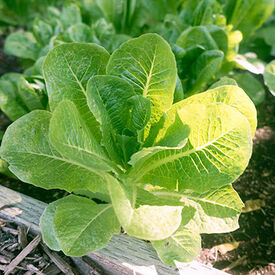
The Little Caesar Lettuce is a very attractive tall romaine type with crisp, bright green outer leaves and golden-blanched inner leaves. This lettuce has a sweet, crunchy flavor that is delicious on any sandwich or salad. This variety is easy to grow and is perfect for smaller gardens. Little Caesar is best picked right before eating.
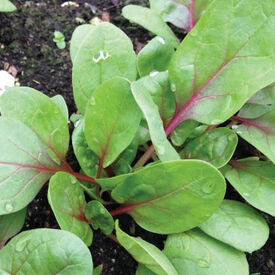
The red veined Red Tabby Spinach has beautiful tender smooth leaves. This variety is an excellent baby leaf spinach that does well in spring, fall and winter. Its uniform, smooth leaves grow straight and upright. Red Tabby is also resistant to downy mildew races 1-13.
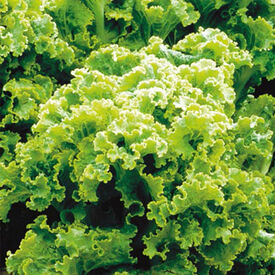
Green Ice is a crispy loose-leaf lettuce that does well in hot weather! This variety produces an abundance of crunchy loose leaves. Green Ice's leaves are curled with deep green color. This lettuce is ready in just 45 days, it is among the earliest, yet will last well into summer thanks to its superior heat tolerance. Green Ice is one loose-leaf that just won't bolt!
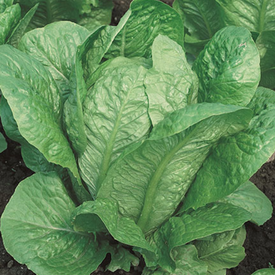
The Vivian lettuce is a tightly bunched romaine with broad dark green crisp leaves. Its leaves are 12-16 in. long and 4-6 in. across. Vivian is bolt resistant and suitable for commercial and home growers. Its erect dark green leaves are great for baby leaf production.
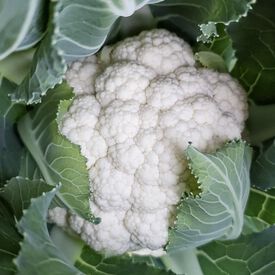
Snowball Y Improved cauliflower is a popular open pollinated variety! This cauliflower is known for its vigorous, rapid growth and long harvest. Its head is snow-white and measures 7-8" inches across. Give this cauliflower fertile soil, full sun and steady moisture and you'll be rewarded with large, delicious heads that are high in vitamin C.
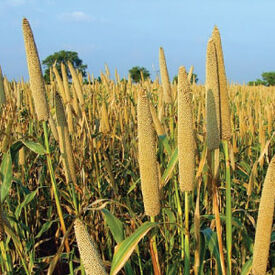
The Pearl Millet is a very tall grass that can reach to be 15 feet tall that is used as a multiple cut forage grass and green manure. This grass is high in protein, digestible and free of prussic acid. The Pearl Millet is perfect used for hay, pasture and silage for feeding cattle, horses, goats and other livestock. The Pearl Millet is also a very good green manure that is well adapted to low soil moisture, low fertility and high temperatures. Uses: Erosion Control, Green Manure, Nitrogen Scavenger, No Till, Organic Matter (Biomass), Weed Suppression
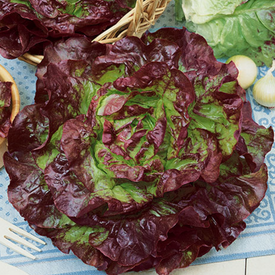
Carmona Red is a favorite among many market growers! This lettuce variety produces big, bright red heads with lime green hearts. The Carmona Red has a nice silky texture and is very disease resistance.
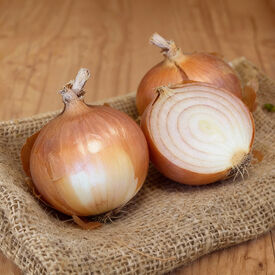
Caliber is a late-season yellow long day for the western United States known for vigor, disease resistance, yield, and storage capabilities. Caliber is a Celebrate hybrid with a healthy plant with solid roots and strong and erect tops that assist in providing thrips tolerance and make applications easier. Caliber has a consistent rich bronze scale in super colossal bulbs with single centers that do very well with a mechanical harvest. Caliber has a reputation for storing very well long term. Disease Ratings: HT to Pink Root and Fusarium, T to Bolting and HT for Thrips
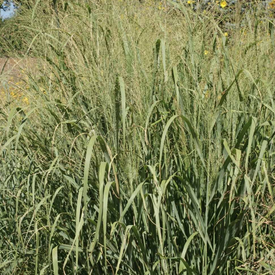
Switchgrass is a rhizomatous, warm-season bunchgrass that is native throughout most of the U.S. It is a major component of the Tallgrass Prairie ecosystem. Alamo originates from Live Oak County, Texas. It is late maturing and was developed as a renewable biofuel resource for the southern U.S. Recommended for pasture mixes, erosion control and soil stabilization. It also provides good nesting habitat, cover and food for many different types of wildlife.
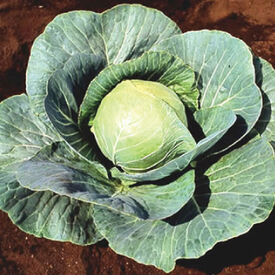
Early maturing cabbage with tight heads! Stonehead is a fast grower with 6" heads that average between 4-6 lbs. when mature. Good texture and flavor. This hybrid resist yellow and black rot very well. A great market variety that matures early, won't split and holds well after harvest. Grows well throughout the United States. An All American Selection winner in 1969.
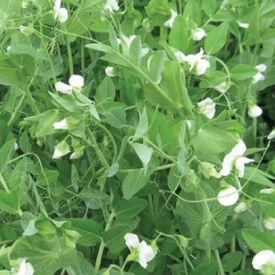
The Austrian Winter Pea, sometimes called black pea or field pea, is a great cool season legume for cover crops, wildlife and winter grazing! This cool-season, annual legume has good, nitrogen-fixing capabilities. The Austrian Winter Pea is a low-growing, viny legume which has been shown to fix over 200 pounds of nitrogen per acre per year. It has hollow, slender and succulent stems, 2 to 4 feet long. The foliage is pale green, and the flowers are colored, usually purple, pink or reddish. Uses: Chicken forage, deer attractant, forage, green manure, nitrogen fixation, no till, organic matter (biomass), weed suppression
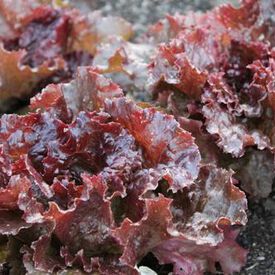
The Red Sails Lettuce is a full rosette type that produces radiant bronze-red, ruffled and deeply lobed leaves that have a mild bitter-free flavor that pairs very well in salads. This slow-bolting lettuce is ready to cut early and holds its quality very well. Red Sails has six times the vitamin A and three times the vitamin C as other supermarket lettuces. This variety thrives in cool weather, but can also grow well in the spring, summer or fall.
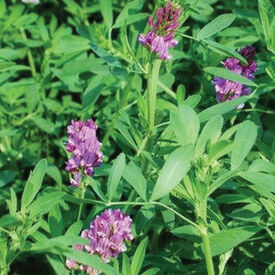
The Common Alfalfa is a somewhat winter hardy perennial legume, but it grows more quickly than other regular alfalfa varieties. As an annual green manure, this cool-season "Summer" alfalfa can produce up to 10 tons of organic matter per acre. Its long taproots break up compacted soil and bring up subsurface minerals. High nitrogen fixation and great bee forage. Alfalfa is basically good at everything, as it great for nitrogen fixation and bee forage! Just look at all it's uses below! Alfalfa (Medicago sativa L.): Cool season, broadleaf, Perennial, Legume (N-fixation), Upright plant growth, Crude protein: hay or silage 14-22% Uses: Bees & Beneficial Insects, Chicken Forage, Compaction Control, Deer Attractant, Erosion Control, Forage, Green Manure, Nitrogen Fixation, Nitrogen Scavenger, No Till, Organic Matter (Biomass), Weed Suppression
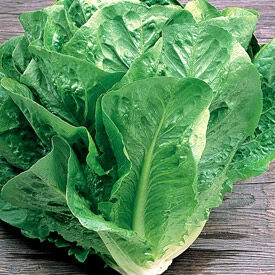
The Green Towers Lettuce is an easy to grow, tasty green leaf lettuce. This lettuce variety offers a mild flavor with an attractive semi-savoyed texture. The Green Towers is a favorite for its adaptability and dense habit! This lettuce will grow great in any climate!
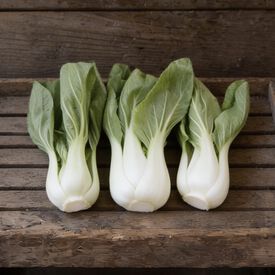
White Stem Pak Choi, also known as Bok Choy or Pak Choi, is a versatile and popular Asian cabbage variety with origins in China. This leafy green vegetable has been cultivated for centuries, appreciated for its tender leaves and crisp, white stems. Characterized by its vibrant green, broad leaves and smooth, white stalks, White Stem Pak Choi is both visually appealing and nutritious. The flavor is mild and slightly sweet, making it a popular choice in stir-fries, soups, and salads. Harvesting typically occurs 45-60 days after planting, when the plants reach a height of about 12-18 inches, and can be done by cutting the entire plant or picking individual leaves. White Stem Pak Choi thrives in cooler weather, preferring well-drained soil and full sun, making it suitable for spring and fall planting. Its rapid growth and ability to produce multiple harvests, combined with its rich content of vitamins A, C, and K, make it a favorite among gardeners and cooks alike. Overall, White Stem Pak Choi is valued for its crisp texture, mild flavor, and adaptability in a variety of dishes.
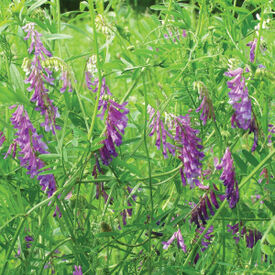
When sown late summer, the Hairy Vetch spring regrowth is vigorous and nitrogen-producing, for tilling in before planting spring garden crops. You can sow with or without grain, grass or field peas! The typical nitrogen produced of this legume is 100 lbs. per acre. The Hairy Vetch has rapid growth that makes it a good weed suppressant. Uses: Bees & Beneficial Insects, Chicken Forage, Deer Attractant, Erosion Control, Forage, Green Manure, Nitrogen Fixation, No Till, Weed Suppression
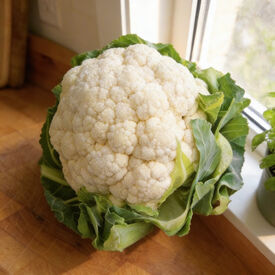
The Snow Crown cauliflower is a delicious, mild and sweet hybrid. This cauliflower's head will get to 7-8 inches across and 1-2 pounds. The Snow Crown is extra early and adaptable and can be harvested in summer or fall. Be careful not to under-fertilize or water, stress can cause a purplish discoloration on the undersides of the head.
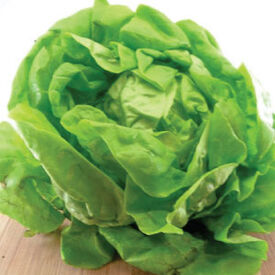
Bibb is a crisp, clean, and easy to grow butterhead lettuce that has light green leaves with the occasional red spots. The crispy heads often self blanch in the center. This lettuce variety is perfect for farmers markets and for the home gardener. This Bibb does well in the heat, yet still grows quickly in our cool weather. Lt. John B. Bibb served in the War of 1812, represented Logan County in the Kentucky House of Representatives and the state Senate from 1827 to 1834. Lt. Bibb was also an amateur horticulturist and developed the Bibb lettuce we know and love today. However, it wasn't offered commercially until 1935.