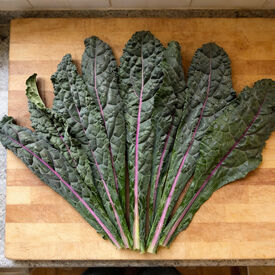
The Dazzling Blue Kale is a beautiful, cold-tolerant lacinato-type that produces large blue-green leaves with deep purple veins. This kale is sure to add a delicious pop of color to any salad! This variety will survive freezing temperatures better than other lacinato types and will even intensify with cool temperatures.
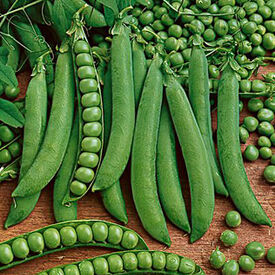
Green Arrow peas are a classic heirloom variety valued for their exceptional taste and reliable performance. Originating from the United Kingdom, this variety has been a staple in gardens for many decades. The Green Arrow pea plant is known for its vigorous, upright growth habit, typically reaching heights of 2 to 3 feet, making it suitable for small to medium-sized gardens and easy to manage without extensive support. The peas themselves are distinguished by their smooth, bright green pods and plump, tender peas that offer a sweet, fresh flavor. These peas are primarily used for fresh eating, though they are also excellent for freezing. They are generally harvested when the pods are fully formed but still tender, usually in late spring to early summer. The Green Arrow variety is appreciated for its high yield and disease resistance, which contribute to a bountiful harvest. With its sweet flavor, productive growth, and ease of cultivation, Green Arrow peas remain a popular choice among gardeners seeking a dependable and delicious pea variety.
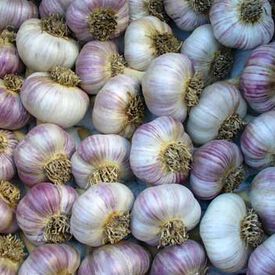
The Siberian garlic is certified and does great in cold weather! Siberian is a mid-season garlic and a great producer in cold climates. This variety does great for all northern gardeners! The cloves of this garlic are protected by an attractive light red skin. This clean, medium-to-strong flavored garlic will warm your soul on the coldest winter evening! Siberian has a very high allicin content, possibly the highest of any garlic. Allicin supports normal cholesterol levels, boosts the immune system, and enhances circulation! Approximately 12 garlic bulbs per pound. Approximately 4-5 cloves per bulb. Hardneck Garlic
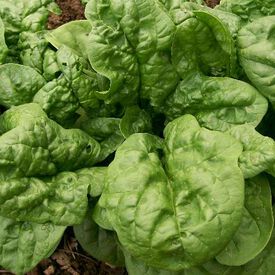
The Bloomsdale spinach is such an attractive, tasty, and a popular garden standard spinach. Bloomsdale spinach is an old favorite amongst gardeners and is now available in organic seeds! It has excellent flavor and produces large quantities of delicious leaves. Spinach is also very nutritious with lots of Vitamin A, C, and iron and is low in calories. Certified Organic. Learn more about our organic seeds.
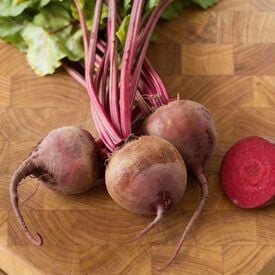
The Lutz Green Leaf Red Stem Beet has a beautiful deep red hue and a mouth watering taste that pairs perfectly with any dish. This variety is known for having huge glossy, deep green tops that are amazingly delicious! This beet is a "winterkeeper" beet that has a long standing storage capability. The Lutz Green Leaf Red Stem has 6 inches in diameter roots.
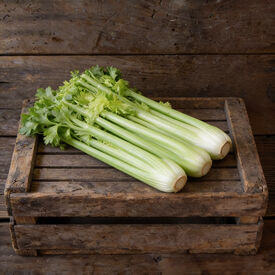
Tall Utah is very dependable celery variety for home gardeners and market growers alike! This celery is a favorite that now comes in organic seeds. Tall Utah has dark green stalks that pacts in a crisp delicious flavor. Start seeds when weather has warmed up so that the crop matures in fall.
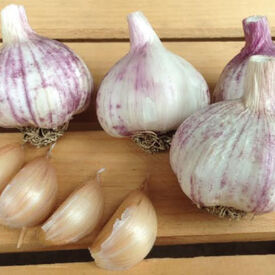
Georgian Fire garlic is a certified, farm favorite with a stunning flavor and cloves! This garlic variety has the classic garlic porcelain sheen and flavor. The Georgian Fire variety is the beauty queen of the garlic world. Its cloves grow large and average about 6 to 8 per bulb. This garlic can be eaten raw as they have a pleasantly hot flavor. Roasting really brings out the flavor of Georgian Fire! Porcelain hardneck type. Approximately 10 garlic bulbs per pound.
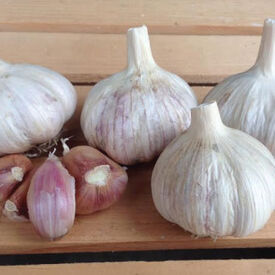
Italian Red is a certified, great tasting and excellent storing garlic! Italian Red Porcelain is the garlic variety that is widely grown throughout the United States originating in California. Early Italian Red hardneck garlic is a very heat-tolerant porcelain-type garlic that can be planted in spring in northern gardens for a fall harvest! This garlic variety produces 6-10 large cloves per bulb that are fairly mild with a little garlic spiced flavor which intensifies during storage.
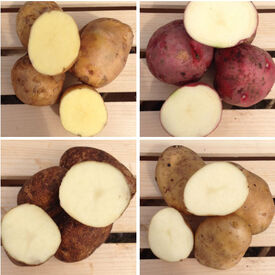
The Standard Mix is a blend of popular delicious seed potatoes that are great for baking, boiling, frying, mashing and more! Each variety of potato in the Standard Mix has approximately 8 potato seed pieces per pound. Usually 3-5 potatoes that can be cut into more pieces to plant. Minimum of 4lbs (1lbs of each variety). Yukon Gold - Best seller and an excellent keeper! Attractive, smooth, thin yellow skin, shallow eyes, yellow flesh and uniform yields. If you like your fried potatoes golden brown, Yukon Gold will almost turn that color by themselves. However, with Yukon Gold, your mashed potatoes are golden and beautiful to both the eye and the taste. When first harvested, Yukon Gold shows unique pink eyes not seen in other yellow varieties. They are best when home grown! Russet Burbank - The Idaho Potato that Idaho built its reputation on! Also known as the "Idaho Netted Gem" or simply "The Russet". It is the most widely grown potato in the United States. We have eaten literally thousands of them baked, and the last one tasted just as good as the first. Dr. Burbank even admitted he was fortunate to have bred this cultivar. Red Pontiac Easy and adaptable red potato for home gardening. Most likely the easiest and most adaptable red potato there is to grow, not to mention the consistent flavor! Attractive deep red skin and eyes, white flesh. The tuber of choice for new potatoes or fresh eating. Red Pontiac - Comes from Florida in 1945 so it grows well in both the South and North regions. Kennebec Potato Seeds One of the most popular potatoes grown by home gardeners. High yields of large, white skin, white fleshed tubers that grow well under harsh conditions. Kennebecs - Superb boiled, mashed, fried, hashed or baked. Good jacket potato - smoother it in sour cream, cheese, chives and bacon. It's absolutely perfect. If it is late in the season and we are out of a variety above, we will substitute the next closest variety.
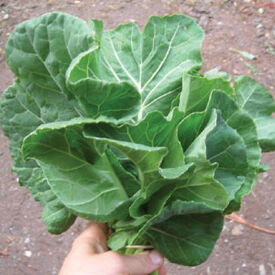
The Champion collard is a tasty improved Vates selection! These large, dark green, cabbage-like leaves retain eating quality for up to 2 weeks or longer. Champion is a compact collard plant that has an increased bolt resistance and enhanced winter hardiness, truly making it a champion!
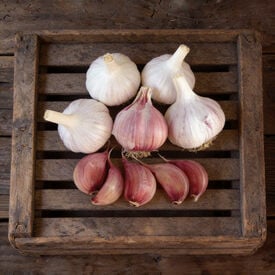
Chesnok Red garlic is one of the best baking garlic's available! This variety is a fantastic garlic that holds its shape and flavor well when cooked. Its stores well. Chesnok Red is regarded by some as the best all around garlic variety as it has a very beautiful red color.
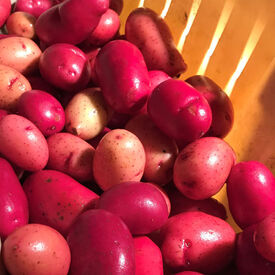
Clancy potato seed produces compact and healthy dark green plants with blue flowers. Resulting spuds are a beautiful ornamental mix ranging from red to rose blush skin tones with interiors of creamy white and yellow. Note: Clancy seeds are actual small seeds and will ship immediately year round.