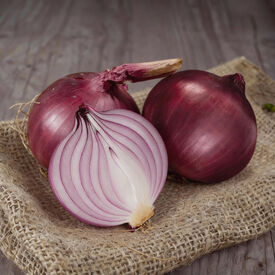
Red Rock demonstrates good size with excellent internal dark red color and a good single-center percentage. Red Rock has a very good red scale and produces a nice firm bulb that can be stored for several months. It is also a Celebrate Onion with a good root system and grower friendly structure. Disease Ratings: High Tolerance for Bolting. Good Tolerance to Pink Root and Fusarium.
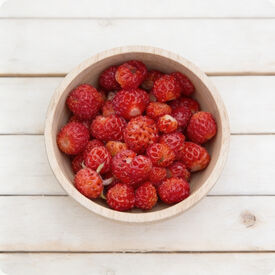
Fragaria virginiana, commonly known as the Virginia or Wild Strawberry, is a native North American species that played a key role in the history of cultivated strawberries, having been crossed with the Chilean strawberry (F. chiloensis) in the 18th century to produce the modern garden strawberry. These plants spread by runners and form low mats, producing small, deep red berries that are celebrated for their intense sweetness and concentrated, classic strawberry aroma. While smaller than commercial varieties, the fruit packs a rich, complex flavor that many describe as more “wild” and satisfying. Adaptable and resilient, F. virginiana thrives in fields, forest edges, and meadows, with attractive trifoliate leaves, delicate white flowers, and a long tradition of use by both wildlife and people.
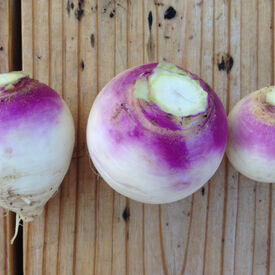
The Purple Top White Globe Turnip is a beautifully purple and white colored turnip that is the best tasting turnip around! This turnip variety has a fine grained root that can grow as big as a baseball! The popular Purple Top White Globe is an excellent yielding turnip that is a great fall crop that gets even better with cold weather.
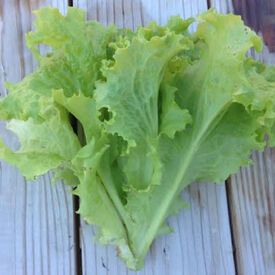
The Seafresh Lettuce was selected for its great heat tolerance! This variety is a great tasting looseleaf lettuce that thrives in hotter climates. The Seafresh Lettuce is a great addition to any garden and will definitely not be a disappointment!
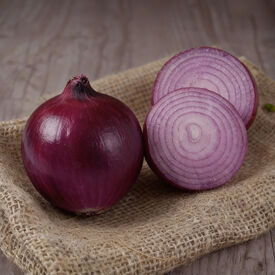
A dark rich red color characterizes this hybrid on the outside, and inside it has distinct ring development. Purple Haze has a good combination of maturity and bulb size. A good disease package compliments this vibrant and vigorous hybrid. Disease Rating: High tolerance to Pink Root and Bolting and Good Tolerance to Fusarium.
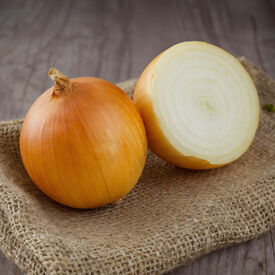
Yellow Sweet Spanish onion seeds grow into a classic heirloom variety that dates back to the early 20th century, prized for its large, globe-shaped bulbs and mild, sweet flavor. These onions typically reach 4–6 inches in diameter and feature golden-yellow skin with crisp, white flesh inside. They thrive in full sun and loose, well-drained soil rich in organic matter, requiring consistent moisture and a long growing season of about 110 days. Seeds can be started indoors 8–10 weeks before the last frost or sown directly once the soil warms. The resulting onions are excellent for fresh eating, caramelizing, or adding a subtle sweetness to soups, salads, and sandwiches.
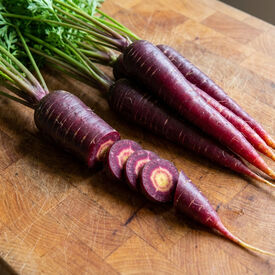
Purple Sun produces Uniform roots with smooth shoulders. Dark purple carrots that grow up to 10" in length. A great production carrot for fields, bunching and mechanical harvest.
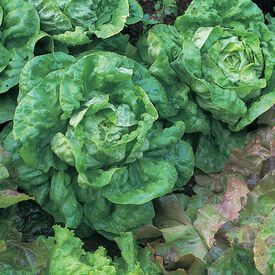
All The Year Round Lettuce is a medium-sized green headed lettuce that is just like its name, good for all the year round! This slow bolt variety is solid even in hot weather, and good for far northern areas as it is very hardy. Sow All The Year Round in spring or late summer!
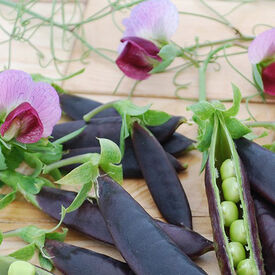
The Sugar Magnolia Pea is a beautiful deep purple colored sugar snap pea that is the result of over 15 years of development! This spectacular beauty has a very sweet flavor and is best before the pods get too fat. Make sure that this climbing variety has a trellis, as its sturdy vines reach to be 6-7 feet tall. Add the Sugar Magnolia to fresh salads or as a steamed side dish for a pop of color!
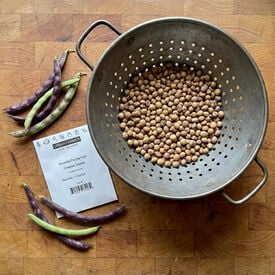
The Knuckle Purple Hull is a bush type cowpea producing heavy yields of purple pods. Cowpeas in general are great for drying and canning. This variety tends to stay off the ground and cluster making for easy picking. This cowpea is referred to as a "Knuckle Hull" because of the big, plump cowpeas. Try with cowpea inoculant for maximum Nitrogen fixation.
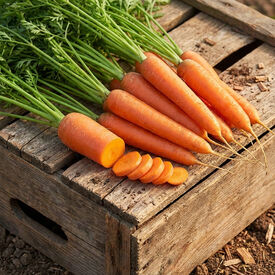
The fine smooth texture of the Nantes carrot makes it perfect for fresh eating, freezing or juicing! This bright orange carrot is a garden favorite. Nantes has an excellent sweet flavor as an early baby carrot. It can be over-wintered or grown in high tunnels for a spring harvest. Certified Organic. Learn more about our organic seeds.
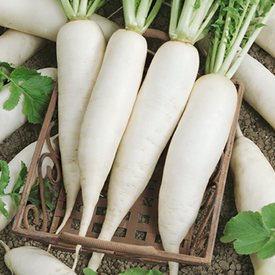
Daikon Radish has a crisp firm flesh is pure white. This Daikon radish, produces long tapered white radishes that are mostly used as winter radishes. The Minowase has a great, mild taste that is excellent in many Oriental dishes. This radish variety is great for spring or late summer planting.
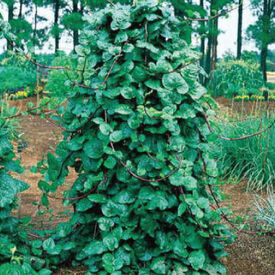
Red Malabar spinach (Basella rubra) is a heat-loving, vining green that thrives through the hottest days of summer when traditional greens fade. This vigorous Asian vine features glossy, thick, slightly savoyed dark green leaves set against striking deep red to purple stems, making it as ornamental as it is edible. The mild, chard-like flavor works well when young leaves and tender stems are used fresh in salads, blended into smoothies, or lightly cooked in stir-fries. Exceptionally tolerant of heat and humidity, it produces an abundance of nutritious greens well into fall, along with deep purple berries rich in anthocyanins that can be used as a natural dye. Not a true spinach, this beautiful plant is typically grown as an annual in cooler regions and as a perennial in subtropical climates, but it is not frost hardy.
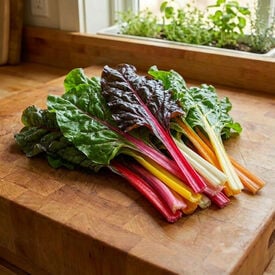
This heirloom Rainbow Swiss chard is remarkably easy to grow and delivers a steady harvest of nutritious greens from a single sowing all season long. Plants feature an upright growth habit that keeps leaves clean and makes harvesting simple, whether picked young or at full size. The vibrant blend of stems ranges from red, pink, white, yellow, and gold, paired with leaves that shift from bright lime green to deep purple-green as they mature. While baby leaves tend to show softer tones—mostly pinks, reds, and whites—the colors intensify as plants reach full size, creating a striking and colorful display that’s as eye-catching in the garden as it is at market.
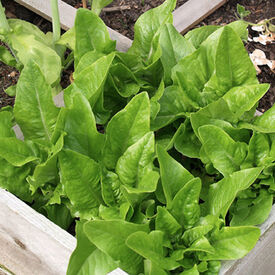
The Deer Tongue Lettuce really does look like a deer tongue! These triangular leaves are excellent for baby salad greens. Deer Tongue lettuce has medium-green leaves that form loose upright heads that are slow to bolt. This is a popular variety with many heirloom growers, as Deer Tongue has been an Amish favorite for decades!
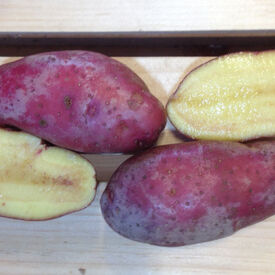
SPRING SHIPPING - Certified - The French Fingerling is a gourmet quality fingerling with a deliciously beautiful bright red skin. This fingerling has red skin and a creamy yellow flesh. The French Fingerling produces good quality, medium size tubers which are beautiful when served in various dishes.
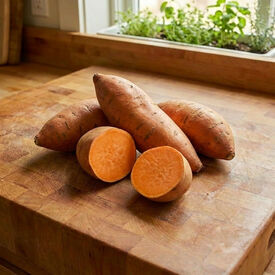
Certified - The Centennial Sweet Potato is probably the most widely known variety recognized in America! This variety has a carrot-like color on the inside with a copper to orange outside skin. Centennial is nicknamed "Baby Bakers" and is ready in about 90 days. The delicious Centennial has been used in many bake-off contests and is a favorite for making sweet potato fries!
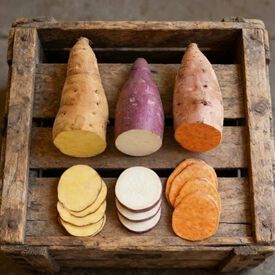
Enjoy a mouth watering blend of the Sweet Potato Lover's mix! This mix contains all 3 of our most colorful and popular varieties that we carry! This mix contains Centennial, Murasaki Purple and O'Henry. We may have to substitute a variety at the end of the season if supplies are low.