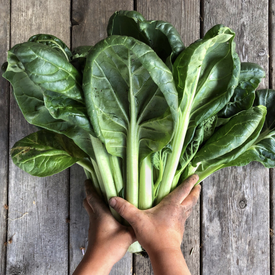
Tatsoi is a flavorful and versatile Asian green that thrives in cooler weather, making it a popular choice for spring and fall plantings. Known for its glossy, dark green, spoon-shaped leaves, Tatsoi has a mild, mustard-like flavor with a slight sweetness, making it a great addition to salads, stir-fries, or as a garnish. Tatsoi seeds produce compact, rosette-shaped plants that grow quickly and are easy to harvest, often within 30 to 40 days. This hardy green is also appreciated for its high nutritional value, offering a rich source of vitamins A, C, and K, as well as calcium and iron. Its adaptability and fast-growing nature make Tatsoi a favorite among both commercial growers and home gardeners looking to add a nutrient-dense and visually appealing crop to their gardens.
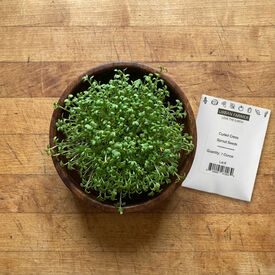
The Curled Cress is a highly nutritious aquatic green. This cress has been cultivated for hundreds of years. This peppery and pungent cress has the same tangy flavor as watercress, as they are of the same botanical family. Curled cress is great for seed sprouting or microgreen growing!
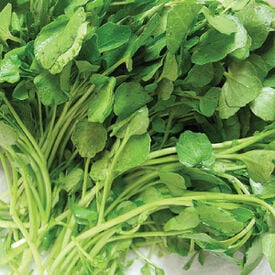
The Upland Cress is a highly nutritious aquatic herb. This cress is a slow to bolt green, but once it's established it will take off and have a long growing season! Upland's 6-8" rosettes of dark green, glossy, rounded leaves are very tasty and refreshing. Upland is very similar to watercress, but is much easier to grow!
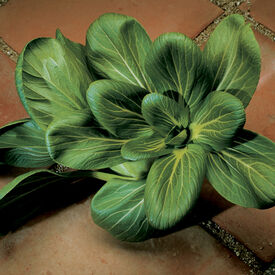
Feng Qing Choi cabbage is a slow bolting Mei Qing Choi type with good plant size and dark leaf color. This variety has excellent holding ability and uniformity.
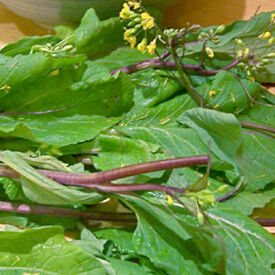
The Hon Tsai Tai has deep purple tender stalks with a slight mustard flavor that is great in different salads or cooked into stir fries! Its green leaves have petite florets that are best harvested right before the bright yellow blossoms open. Hon Tsa Tai is best grown in mid to late summer.
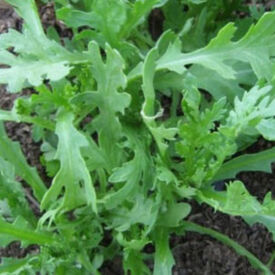
Garland Serrate Leaf Greens is a delicious Japanese green that is an edible chrysanthemum. This popular Japanese green has serrated, dark green aromatic leaves that have an excellent flavor that becomes stronger with age. Garland Serrate is easy to grow and produces high yields with side shoots.
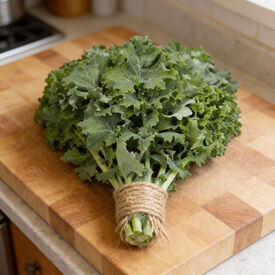
The Dwarf Siberian Kale leaves are perfect as a garnish and in hearty winter dishes. This frilly green and purple kale dances in the crisp early morning cold and thrive. Why? Because its roots are from Russia!
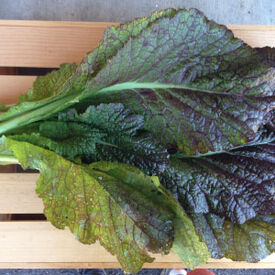
The Red Giant is a large mustard with an excellent, pungent flavor. This variety is a large purple-red leaf type. The Red Giant is great used as an ornamental or salad garnish. This variety's flavor has a slight hint of wasabi and grey poupon.
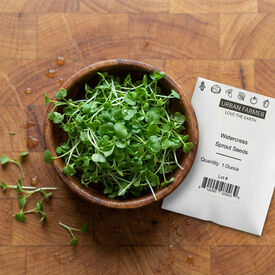
True Watercress is a delicious highly nutritious aquatic herb. This watercress has a wonderful fresh peppery-tasting flavor. Being semiaquatic, this cress is a creeping perennial whose leaves are popular in salads, sandwiches and as a garnish. True Watercress grow rapidly in in damp soil and can be grown in pots of soil placed in a tub of water if water is changed weekly.
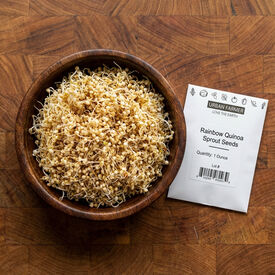
The Brilliant Rainbow Quinoa blends beautifully into meals or salads. Just like its name, this quinoa contains a spectrum of many different colored heads - red, orange, gold, white, and green. The Brilliant Rainbow Quinoa's leaves have a salty spinach-like flavor. Harvest for greens when 6-8" tall or let grow for beautiful tall blooms that can be harvested for grain. This Quinoa's grain has a nutty flavor that goes well with any dish!
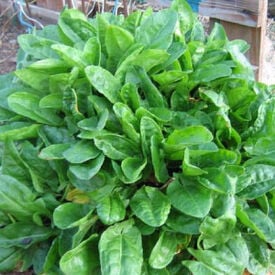
The Large Leaf Sorrel has delicious lemon flavored leaves that go great with a zesty salad or savory soup! These greens are best harvested in early spring and late fall when it's most tender. Garden Sorrel has pointed leaves that form thick clumps. The Garden Sorrel is popular for being high in Vitamin C.
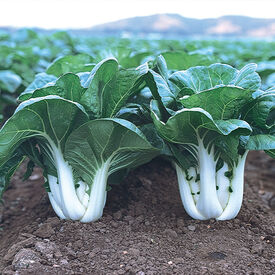
The Joi Choi Bok Choy has very tender dark green leaves with crisp white stalks. This variety is slow bolting with high yields. Joi Choi Bok Choy is perfect for growing in fall and winter, as it is cold tolerant.