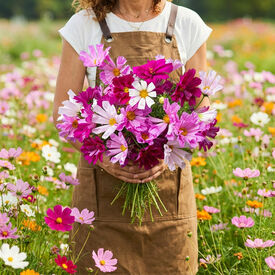
The Sea Shells Mix Cosmo is a beautiful variety that produces unique tubular petals and bloom in a mix of crimson, rose, pink and white shades. This cosmo mix is suitable for cutting, beds and borders, and the pollinator garden.
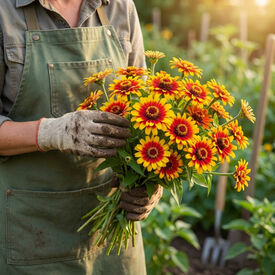
The bright, multi-colored sun-loving Sombrero Zinnia bursts of vivd red and yellow and will bloom all throughout spring and into early fall! This easy to grow zinnia is also great for attracting pollinators. The Sombrero is a wonderful cut flower, as it has a long vase life!
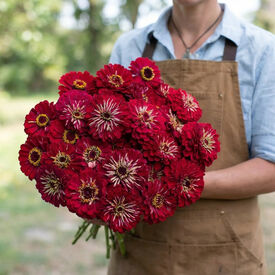
Benary's Giant Deep Red zinnias are renowned for their intense, vibrant color and impressive floral attributes. Developed by the Benary breeding program in Germany, this variety was created to offer gardeners a bold and enduring red hue combined with the reliable performance characteristic of Benary zinnias. The plants produce large, fully double flowers with a deep, rich red color that stands out prominently in garden beds and floral arrangements. Each bloom is distinguished by its densely packed, ruffled petals, which create a full, rounded appearance and add significant texture to the garden. Benary's Giant Deep Red zinnias typically reach heights of 24 to 36 inches and exhibit a bushy, upright growth habit, making them ideal for both garden beds and cutting gardens. They begin blooming in mid-summer and continue to produce their striking flowers well into the fall, often lasting until the first frost. These zinnias thrive in well-drained soil and full sun, demonstrating excellent heat tolerance and resistance to common garden pests. With their bold red color, substantial bloom size, and extended blooming period, Benary's Giant Deep Red zinnias are a dramatic and enduring choice for adding vibrant color and texture to any garden or floral display.
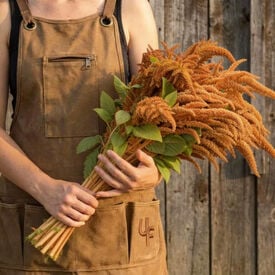
Hot Biscuits is an easy to grow plant that is great as a cut filler in bouquets and vases. This plant grows 40-48" tall and produces heavy yields of bronze blooms. To encourage optimum branching it's recommended to pinch out the center (apical) bud.
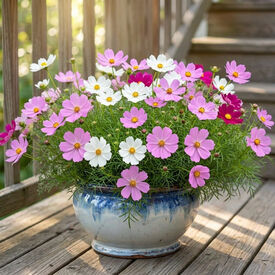
The Dwarf Mix Cosmo is a dwarf flower variety that gives you all of the beautiful pink, red and white colored blooms without all the growth. This mix blooms throughout the summer producing large, colorful flowers with broad, fluted petals with a delicate, feathery foliage that blooms from midsummer on. The Dwarf Mix tolerates poor soil and hot, humid conditions. Excellent for container growing to brighten up any patio or garden.
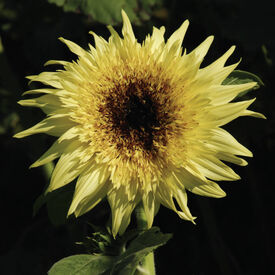
Starburst Lemon Éclair sunflower has a rich chocolate center with bursting lemon petals. It matures early and is one of the first to cut. Narrow plantings encourage plants with a dominant center flower that is perfect for cutting. Give it space and Lemon Éclair will develop branches bearing smaller flowers.
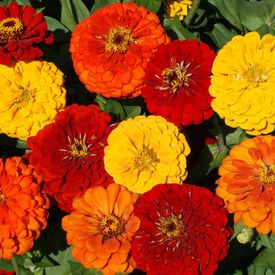
Lava Lamp blend is composed of yellow, orange and red zinnia varieties. This mixture produces beautiful blooms of semi-double to double flowers on each stem. Zinnias are a perfect choice for any cut flower grower and even attract butterflies to your garden. Large, colorful blooms lend cheer and texture to bouquets and floral arrangements. Spread at 19 lbs per acre or 7 ounces per 1,000 sq.ft.
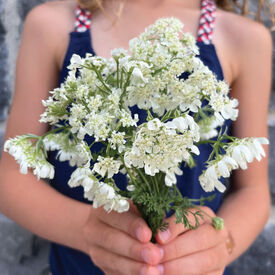
White French Orlaya (Orlaya grandiflora), also known as White Lace Flower, is a delicate, lacy annual native to the Mediterranean region and long admired in European cottage gardens for its airy, vintage charm. It produces clusters of pure white, intricately patterned blooms atop slender, branching stems that reach 18–24 inches tall, resembling a more refined version of Queen Anne’s lace. Easy to grow, it thrives in full sun and well-drained soil, and can be direct sown after the last frost or started indoors 4–6 weeks earlier for earlier blooms. Requiring minimal care beyond occasional watering, Orlaya matures in about 65–75 days and makes an excellent cut flower, filler for floral arrangements, and pollinator-friendly addition to borders or wildflower plantings.
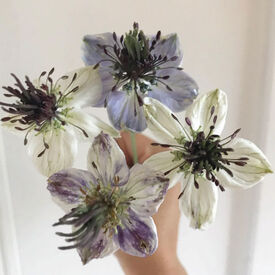
Delft Blue Nigella, also known as Nigella damascena, is a striking variety of the ornamental flower commonly referred to as Love-in-a-Mist. With origins dating back to ancient times, this charming plant has long been celebrated for its delicate beauty and unique characteristics. Delft Blue Nigella features ethereal, finely cut foliage and produces distinctive, double flowers in a captivating shade of deep blue, which contrasts beautifully with its lacy green foliage. The plant typically reaches maturity in about 70 to 90 days, blooming from late spring to early summer. It has a compact, upright growth habit, generally standing 12 to 18 inches tall, and is well-suited to garden beds, borders, and containers. Delft Blue Nigella thrives in well-drained soil and prefers full sun to partial shade, making it a versatile and visually stunning addition to any garden. Its unique color and intricate flower structure add a touch of elegance and intrigue to floral displays.
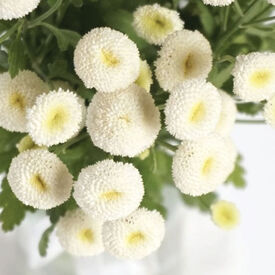
A high yielder of button-like blooms. An excellent filler for bouquets and vases. Blends well with other cut-flowers. An upright plant with lots of strong stems that carry 1/2" snow-white blooms. Also known as feverfew. Seed has been pelleted for ease of sowing.
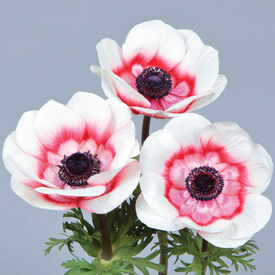
Cut flower Anemone series, Gemstone Red Bicolor, offers vibrant red and white blooms. This anemone boasts large 4-5" blooms on sturdy stems. Longer harvest window offers an advantage for home and market growers.
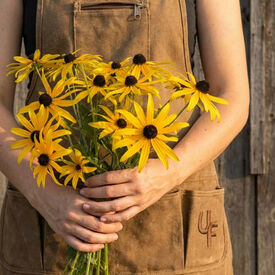
The Black Eyed Susan Rudbeckia is a wonderful, stiff upright flower that is stunning and will definitely grab your attention. This variety is an annual or short lived perennial native to the eastern United States. The Black Eyed Susan is probably the most common of all American wildflowers. The characteristic brown, domed center is surrounded by bright yellow ray florets that thrives in most soils in full sun. The Black Eyed Susan is a true sunshine worshiper that forgives neglect.