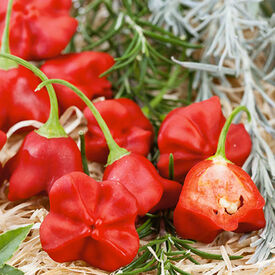
The Mushroom Red Pepper gets its name as it is a bell-shaped hot pepper that will ripen from a lime green to a bright red. This variety is great for pickling or drying and will add a nice hot kick to any dish. This pepper is great for a small garden as it does well in containers. These productive little peppers thrive in tropical regions, but will grow just about anywhere.
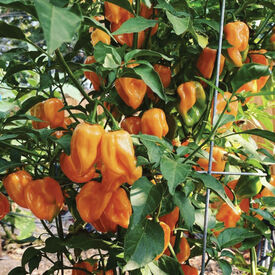
The Orange Habanero Pepper is among the hottest peppers available! This Habanero variety speaks for itself as it is one of the most well known peppers for its hotness. The Orange Habanera will mature from a silvery green to a bright orange color.
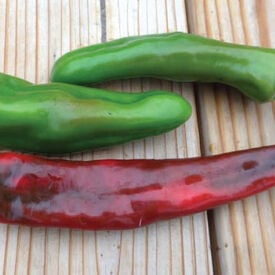
Anaheim Chili is a meaty hot pepper that is great for stuffing. This pepper variety has a mild to medium heat for a chili pepper. Each of these plant produce an abundance of spicy chili peppers that are 5-8" long. Anaheim Chili is great for roasting, stuffing, stews, sauces and eaten raw! A farmer back in the early 1900s bought some of these pepper seeds in Anaheim, California thus giving them the name they have today. Anaheim Chili peppers can be harvested while green or for more spiciness let them turn deep red.
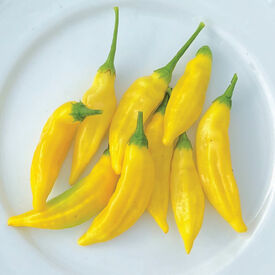
The Lemon Drop is an excellent seasoning pepper from Peru with some heat! When mature it will ripen to be a bright yellow that occasionally turns a purple blush depending on maturity. The Lemon Drop's crisp and clean, uncomplicated flavor is hot with some citrus notes. Its Scovilles top out at 35,000 units.
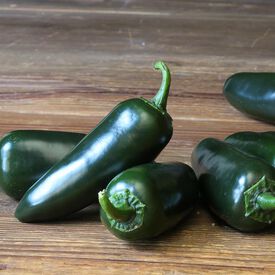
Got its name because of the unusual dark skin this jalapeno has. Fruits mature to 3.5" long and slight checking on the skin which is a sign that it's ready to harvest. High yielding, medium-size pepper plant.
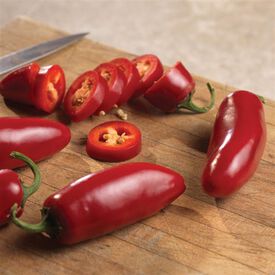
Sriracha pepper plants produce attractive, large, 5" x 1-1/4" dark green, chili-type fruits. Fruits are firm and uniform with shiny, smooth skin and thick walls. Flavor is mildly hot, but not overpowering. Perfect for slicing, roasting and pickling. Peppers have a long shelf life and can be harvested when red.
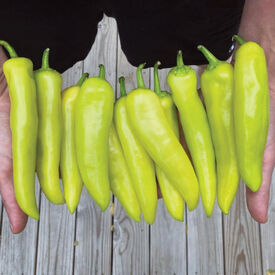
This productive heirloom pepper is well suited to short-season gardens and has long been valued for canning and pickling. Originating from Hungary, it produces light yellow, medium-to-hot peppers with a classic flavor that works beautifully for stuffing, roasting, pizza toppings, and traditional Eastern European dishes. Plants set fruit steadily over an extended harvest window, delivering high yields with quick production. The 5-inch fruits begin a bright yellow and mature to red, adding visual appeal as well as versatility in the kitchen, and they are especially popular as pickled peppers. This heat-loving variety thrives in full sun, reaching maturity in about 70 days With a Scoville heat rating of 5,000 to 15,000, Hungarian Hot Wax peppers provide a nice kick without overwhelming heat, making them versatile for various culinary uses.
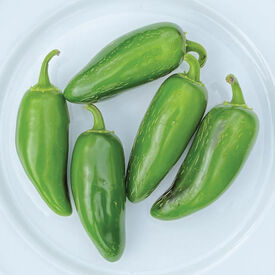
The Jalapeno M Pepper is a high yielding middle of the road hot pepper. This pepper variety has an average hotness level that tastes great in many dishes. Jalapeno M has thick walls with a spicy pungent smell! Typically growing to about 3-5 inches in length, these peppers have a smooth, firm texture and a slightly curved shape. The heat level of Jalapeno M peppers typically ranges from 2,500 to 8,000 Scoville Heat Units, providing a spicy kick that enhances a wide variety of dishes without being overpowering. Originating from Mexico, Jalapeno M peppers are widely used in salsas, sauces, and as toppings for nachos and other dishes. They have a fresh, grassy flavor that complements both cooked and raw preparations. Harvesting usually occurs around 70-80 days after planting, when the peppers are firm and glossy green, although they can also be left to ripen to red for a sweeter taste. These peppers thrive in warm climates and well-drained soil, making them a staple in many home gardens. Their combination of heat, flavor, and versatility has solidified Jalapeno M peppers as a beloved ingredient in kitchens around the world.
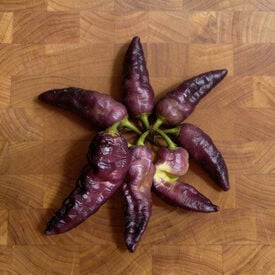
The Purple Bhut Jolokia is a purple Ghost Pepper! This purple wrinkled pepper is 125 times hotter than a standard Jalapeno pepper! The Bhut Jolokia Purple is a rare, natural variant of Red Bhut Jolokia. Ghost peppers can reach over 1,000,000 Scoville Heat Units (SHU). Use with caution!
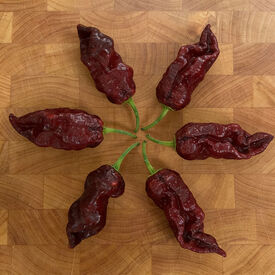
Among the world's hottest peppers! Use with caution, wrinkled brown pepper. 125 times hotter than a Jalapeno pepper! Bhut Jolokia Chocolate is a rare, natural variant of Red Bhut Jolokia. Ghost pepper can reach over 1,000,000 Scoville Heat Units (SHU).
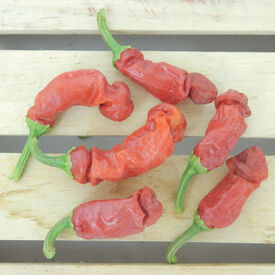
The Peter, aka Willy, Pepper gets it's name, well because of what it resembles! This variety is an old heirloom that is grown as much for its shock value as it is for for its culinary value. Peter is an excellent pepper for chili powder! Its pods are 4-6 inches long with blunt ends that resemble a mans private area, no joke!
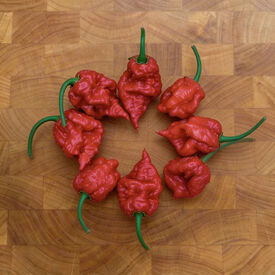
The Carolina Reaper is one of the hottest peppers in the world! This very hot pepper has a sweet chocolate-cherry under tone with hint of fiery citrus. The Guinness book of World Records has the Carolina Reaper at 1,569,000 Scoville Heat Units (SHU). Use with caution, extremely hot!