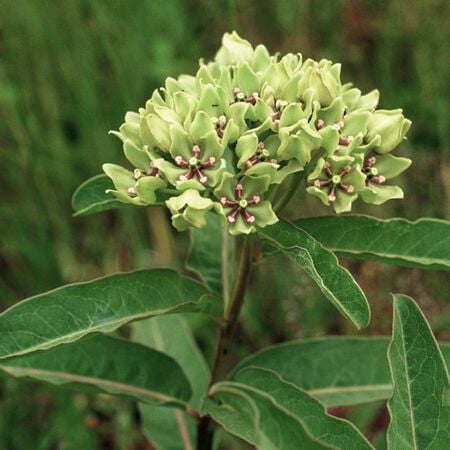
Viridis, Asclepias 'Spider Milkweed'
Out of Stock
Key Attributes




Key Attributes
Product Details
Plant Height
12"Botanical Name
Asclepias viridisSeed Type
SeedAdditional Characteristics
Attracts Pollinators, Deer ResistantSeeds Per Gram
120Seeds Per Pound
54,400Packet
25 SeedsSow Depth
1/4"Seeds Per Ounce
3,400Breed
Open-pollinatedSun
Full SunLife Cycle
PerennialSow Method
TransplantCategories
FlowersDays To Maturity (# Days)
365Components
Growing Instructions
 Learning Download: How to Grow Asclepias
Asclepias, commonly known as butterfly weed or milkweed, is a plant monarch butterflies need to survev, because it is the only food source that monarch caterpillars will eat. It is also is a host plant for other butterflies, such as queen and grey hairstreak butterflies.
Before Planting: Speed up the germination process by placing the seeds in a wet paper towel and then into a plastic bag. Place the bag in the refrigerator for 30 days prior to planting.
Planting: Plant the seeds outdoors in a sunny place, usually in the fall. Plant seeds 1/2 inch deep.
Watering: Avoid watering too much or too little. During droughts or in dry places, keep the flowers blooming with a light watering once a week.
Fertilizer: Asclepias doesn’t usually require fertilizer. However, a top dressing of compost or organic material around the plant can assist with its growth.
Days to Maturity: It takes two months for the Asclepias plant to grow big enough for a caterpillar to eat.
Harvesting: Do not harvest Asclepias, as it does best when it is planted in the garden and easily accessible to monarch butterflies.
Tips: Although its flowers shouldn’t be harvested, you can collect seeds from your milkweed plant to plant more. To collect the seeds, wear gloves and collect the seeds int the fall, when the pods are open. The pods should be green or brown and the seeds should be brown.
Shipping Schedule
Our Seed Promise
 "Agriculture and seeds" provide the basis upon which our lives depend. We must protect this foundation as a safe and genetically stable source for future generations. For the benefit of all farmers, gardeners and consumers who want an alternative, we pledge that we do not knowingly buy or sell genetically engineered seeds or plants.
The mechanical transfer of genetic material outside of natural reproductive methods and between genera, families or kingdoms, poses great biological risks as well as economic, political, and cultural threats. We feel that genetically engineered varieties have been insufficiently tested prior to public release. More research and testing is necessary to further assess the potential risks of genetically engineered seeds. Further, we wish to support agricultural progress that leads to healthier soils, to genetically diverse agricultural ecosystems, and ultimately to healthy people and communities.
To learn more about the "Safe Seed Pledge" please visit www.councilforresponsiblegenetics.org.