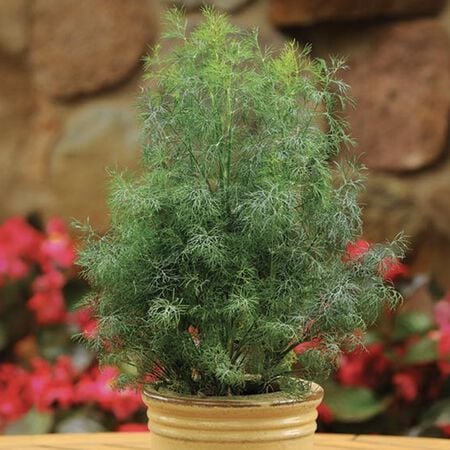
Fernleaf, Dill Seeds
Key Attributes




Key Attributes
Product Details
Weight
0.009Depth
0.1Height
4.5Width
3.25Plant Height
12-24"Botanical Name
Anethum graveolensSeed Type
SeedSeeds Per Gram
596Seeds Per Pound
270,400Packet
100 SeedsSow Depth
1/4"Seeds Per Ounce
16,900Breed
Open-pollinatedSun
Full Sun / Partial ShadeGrowing Conditions
Container FriendlyLife Cycle
AnnualSow Method
Direct SowTransplantCategories
HerbDays To Maturity (# Days)
60Components
Growing Instructions
 Learning Download: How to Grow Dill
Dill is a fern-like, fragrant plant with a great flavor. In addition to its fragrant foliage, dill also produces yellow
blooms that can be used in bouquets, or the green ferns can be used as filler. Dill can reach up to 3 feet tall.
Before Planting: Dill grows best sown directly into the garden in the early spring after the last frost. To ensure a continuous harvest, plant dill seeds every 10 days up until the early summer. Dill also can be planted in containers, like most herbs, but a deep pot should be used to accommodate for the herb’s deep roots.
Planting: Plant seeds ¼ inch deep and 18 inches apart.
Watering: Water regularly. Be careful not to over-water and allow the soil to go dry between watering
Fertilizer: Similar to most herbs dill does not require fertilizing to grow. In the late spring, a light feeding of a 5-10-5 fertilizer will encourage the dill to grow without being overbearing. If dill is grown in a container, use a liquid fertilizer but only use half of the label’s recommended strength. Fertilize container dill every four to six weeks.
Days to Maturity: Dill is ready to harvest any time before its yellow, umbrella-like flowers begin to open. (See each variety for days to maturity)
Harvesting: Once dill is ready to harvest, you can snip individual stems or pull up the entire plant. To save the dill seeds, cut the dill four inches below the flower head once seeds begin to turn brown. Hang the clippings upside
down in paper bags to catch the seeds as they dry and fall out.
Tips: Since dill can grow so tall, shelter it from wind or add a stake to the stem to support the plant as it grows higher.
Shipping Schedule
Our Seed Promise
 "Agriculture and seeds" provide the basis upon which our lives depend. We must protect this foundation as a safe and genetically stable source for future generations. For the benefit of all farmers, gardeners and consumers who want an alternative, we pledge that we do not knowingly buy or sell genetically engineered seeds or plants.
The mechanical transfer of genetic material outside of natural reproductive methods and between genera, families or kingdoms, poses great biological risks as well as economic, political, and cultural threats. We feel that genetically engineered varieties have been insufficiently tested prior to public release. More research and testing is necessary to further assess the potential risks of genetically engineered seeds. Further, we wish to support agricultural progress that leads to healthier soils, to genetically diverse agricultural ecosystems, and ultimately to healthy people and communities.
To learn more about the "Safe Seed Pledge" please visit www.councilforresponsiblegenetics.org.