Learn More
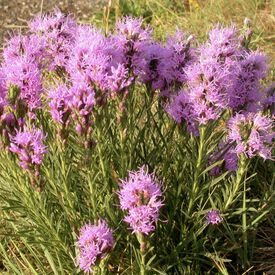
Dotted Blazing Star (Liatris punctata) is a hardy native perennial of the Great Plains and central U.S., historically thriving in dry prairies, foothills, and rangelands where its exceptionally deep root system—often reaching several feet down—helped it endure drought and grazing. This species is known for its compact stature and dense spikes of bright purple, “dotted” flower clusters spaced neatly along the stem, each rich in nectar and highly attractive to bees, butterflies, and especially migrating monarchs. Its narrow, grass-like leaves form a tidy clump, and the plant’s rugged nature makes it well suited to xeriscapes, wildflower gardens, and restoration projects. To grow Dotted Blazing Star, sow seeds in full sun and well-drained, even rocky or sandy soil, allowing for natural winter stratification or chilling seeds before planting; once established, it is long-lived, low-maintenance, and reliably blooms each late summer with vibrant color.
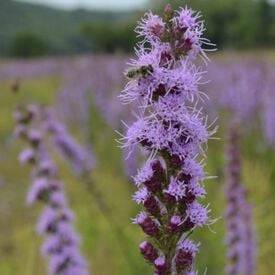
Button Blazing Star (Liatris aspera) is a native wildflower of the central and eastern United States, historically found in dry prairies, savannas, and open woodlands where its tough, deep-rooted nature helped it thrive in harsh conditions. It is known for its thick, sturdy stems topped with rounded, button-like clusters of rosy-purple flowers that open irregularly along the spike, creating a charming, textural look that pollinators—especially bees and butterflies—love. The plant features narrow, lance-shaped leaves that form a basal clump and become smaller up the stem, giving it a clean, upright habit perfect for naturalistic plantings. To grow Button Blazing Star, sow seeds in full sun and well-drained soil, allowing them to undergo natural winter stratification or refrigerate them before planting; once established, it is drought-tolerant, long-lived, and reliably returns each summer with more vibrant blooms.
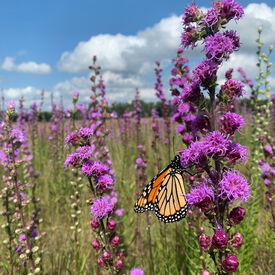
Meadow Blazing Star (Liatris ligulistylis) is a beloved native perennial of the northern U.S. and Canadian prairies, historically thriving in moist meadows and open grasslands and long recognized for its exceptional value to monarch butterflies, which flock to its nectar-rich blooms during migration. It produces tall, airy stems topped with loose spikes of vibrant, feathery purple flowers, each with elongated styles that give the blossoms a delicate, wispy appearance. The plant’s narrow leaves form an attractive upright clump, and its blooms appear later in the season, providing important late-summer nectar. To grow Meadow Blazing Star successfully, plant seeds in full sun and moist, well-drained soil, allowing for natural winter stratification or chilling seeds before sowing; though slow to establish as it builds a deep root system, it becomes a durable, eye-catching pollinator magnet that returns more robustly each year.
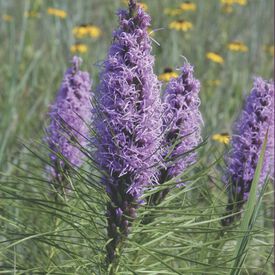
Bottlebrush Blazing Star (Liatris mucronata, though sometimes confused with or grouped alongside Liatris cylindracea in the trade) is a drought-tolerant native of the central and southern U.S., historically found in dry prairies, limestone glades, and open rangelands where its deep roots helped it thrive in harsh, exposed conditions. It earns its name from its showy, bottlebrush-like flower spikes, packed with feathery purple blooms that open from the top downward and draw heavy attention from butterflies, bees, and other pollinators. The plant forms a tidy clump of narrow, grass-like leaves and produces upright stems that remain elegant even in lean, rocky soils. To grow Bottlebrush Blazing Star, sow seeds in full sun with well-drained soil, allowing natural winter stratification—or refrigerating seeds—to ensure good germination; although slow to establish, it becomes a durable, low-maintenance perennial that rewards gardeners with vivid late-summer color and excellent wildlife value.
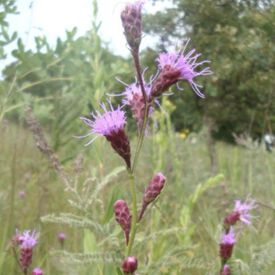
Dwarf Blazing Star (Liatris cylindracea) is a petite, drought-hardy species native to the dry prairies, glades, and rocky outcrops of the central and eastern United States, where its deep taproot allowed it to persist through challenging conditions. Unlike the taller prairie Liatris types, L. cylindracea stays low and compact, often producing short, sturdy flower spikes lined with cylindrical clusters of vivid purple blooms that open from the top down and draw in bees, butterflies, and other pollinators. Its narrow, grass-like leaves form a tidy basal clump, giving it a clean, architectural look ideal for small gardens or rocky sites. To grow Dwarf Blazing Star successfully, plant seeds in full sun and sharply drained soil, and allow for natural winter stratification or chill the seeds before sowing; though slow to establish, it becomes a tough, long-lived perennial that rewards gardeners with dependable, eye-catching late-summer color.
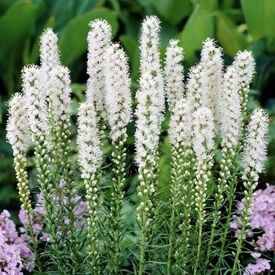
Dense Blazing Star ‘Blazing White’ (Liatris spicata ‘Blazing White’), also called White Gayfeather, is a cultivated selection of the native Dense Blazing Star, originally found in North American meadows and moist prairies. This variety is prized for its striking, pure white flower spikes that bloom from the top down, creating the same dramatic vertical accent as the traditional purple form while offering a bright, elegant contrast in the garden. It features narrow, grass-like foliage forming a tidy basal clump and attracts butterflies, bees, and other pollinators throughout late summer. To grow ‘Blazing White’ successfully, plant seeds or divisions in full sun with moist, well-drained soil; it establishes gradually but becomes a hardy, long-lived perennial that provides reliable, pollinator-friendly blooms year after year.
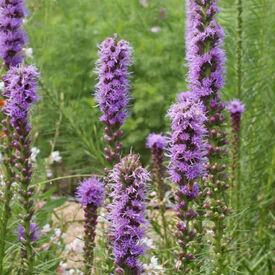
The Gayfeather Liatris is an excellent variety at attracting butterflies, bees and hummingbirds and matures to 4' in wet to mesic soil conditions. Like many Liatris species, when it begins to bloom it starts at the top and works its way down. This is an excellent Liatris species to plant in wet-medium prairies and perennial gardens and it makes to be a perfect cut flower.
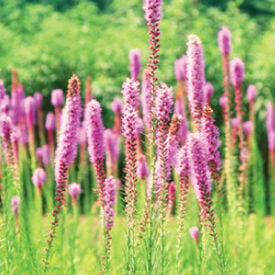
Prairie Blazing Star (Liatris pycnostachya) is a classic North American prairie perennial long valued by Indigenous peoples and early settlers, and today it remains a signature species of tallgrass prairies and restoration plantings. It produces tall, upright spikes crowded with vivid purple, nectar-rich flowers that bloom from the top down, drawing in butterflies, bees, and especially monarchs in late summer. Its narrow, grass-like foliage and sturdy stems create a striking vertical accent in gardens, while its deep-rooted nature provides excellent drought tolerance once established. To grow Prairie Blazing Star successfully, plant seeds in full sun, provide well-drained soil, and allow a natural winter cold stratification or refrigerate seeds before sowing; plants grow slowly at first as they build deep roots but return reliably year after year with increasingly showy blooms.