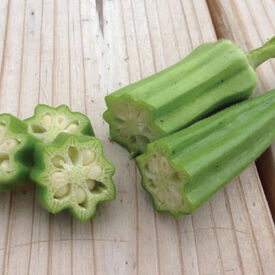
Cow Horn Okra is one of the best flavored okras around that is great for pickling or gumbo! This variety produces larger pods than most okra and should be harvested young and tender. The best time to harvest Cow Horn is at 6," but it can remain spineless, crunchy and tender up to 10" long. This old heirloom okra dates all the way back to the early 1900's. The twisted shape of this variety somewhat resembles the horns of a cow, getting its name, Cow Horn. Use shorter more tender pods for pickling or longer pods for tasty gumbo! The flowers on Cow Horn will start to appear within 45 days with okra pods soon to follow.
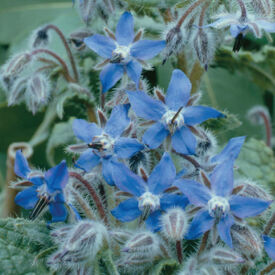
Borage is a mounded plant that produces beautiful blue flowers that are great for using as a garnish for different dishes or drinks. This large variety is a self seeding annual that bears hundreds of small edible flowers, mostly blue and some pink, over a long harvest. Borage has a mild cucumber flavor that is great for salads and garnishes. Medicinal: Seed oil is a rich source of gamma-linolenic acid.
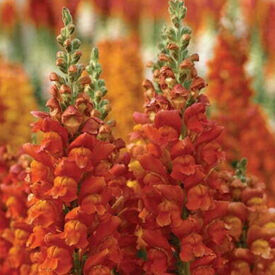
A cooler growing Snapdragon for the early spring days or into the autumn if given shelter. Beautiful seville orange in color makes this variety very attractive for flower arranging. Great for cut-flowers and bouquets. Ht. 24-30". Avg. 194,000 seeds/oz. Packet: 25 seeds.
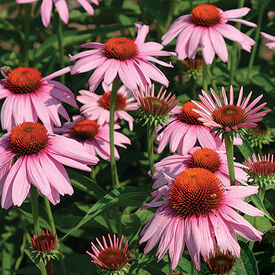
The Purple Echinacea is a coneflower that is a sturdy perennial that is native to the Midwest, Southeast and naturalized throughout the Northeast. One of the most popular wildflowers, the Purple Coneflower can withstand dry conditions, though it performs best in cooler seasons, without irrigation. This variety readily reseeds itself.

Creeping thyme, also known as Thymus serpyllum, is a low-growing, aromatic herb with a long history of use in gardens and culinary applications. Native to Europe and Asia, creeping thyme has been valued since ancient times for its medicinal properties and culinary versatility. This perennial herb is characterized by its tiny, evergreen leaves and dense, mat-forming growth habit, which makes it an excellent choice for ground cover or between stepping stones in herb gardens. Creeping thyme typically features small, delicate pink or purple flowers that bloom in summer, adding a touch of color to its lush green foliage.The plants are known for their resilience and ability to thrive in well-drained soil and full sun to partial shade. With its pleasant fragrance, low-maintenance growth, and ability to attract pollinators, creeping thyme is a valuable addition to both ornamental and functional garden spaces.
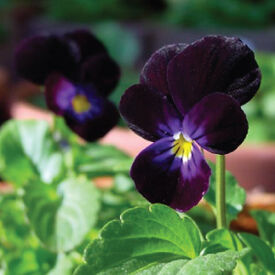
The Blackjack Viola is a favored trailing variety with attractive masked blooms of deep purple to black petals with bright yellow eyes. This Viola is great for hanging baskets!
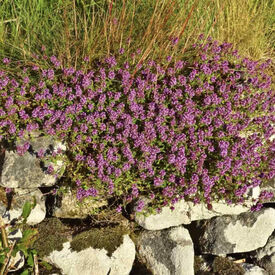
Wild Thyme has a wonder fragrance and beautiful bloom that does well in most gardens. Spreads easily on its own and does well in drought tolerant locations. Forms a dense mat that create an excellent ground-cover. Plants are 6-12 inches tall, and the lavender flowers appear just above the foliage. As with many species in the mint family, the flowers of Wild Thyme are very attractive to honey bees and wild bees. Also know as lemon thyme, larger thyme, and broad-leaf thyme.
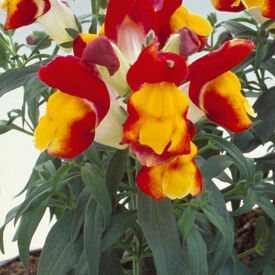
Red Yellow Bicolor Snapdragon produces beautiful red and yellow blended blooms. Floral Showers is one of the best performing dwarf snapdragons around! This early, day neutral has a delicious fragrance, making it a perfect addition to any garden. Performs well in both spring and fall. Excellent cut flower variety. Ht. 8-10". Avg. 185,000 seeds/oz. Packet: 100 seeds.
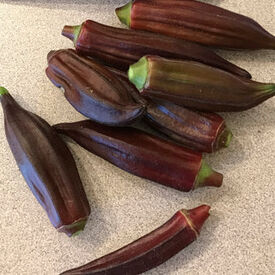
This is an excellent okra plant for tight spaces. French Quarter Red does well in containers and smaller gardens. Produces attractive, compact plants that only reach 24-30 inches tall. Yields 3-5 pods at a time when harvested regularly. Harvest pods at 3-4" in size and use for grilling, stir-fry or jambalaya.
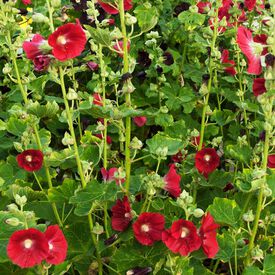
Mars Magic Hollyhock (Alcea rosea 'Mars Magic') is a vibrant, tall perennial prized for its rich, bright red, saucer-shaped flowers that bloom on sturdy, upright spikes throughout the summer. A member of the "Spotlight Series," this variety is known for its strong, single blooms and improved resistance to rust, making it a more resilient choice for cottage gardens and mixed borders. Reaching heights of 5 to 6 feet, Mars Magic adds bold vertical interest and color, thriving in full sun and well-drained soil. Its nectar-rich flowers attract pollinators like bees and butterflies, making it as beneficial as it is beautiful.
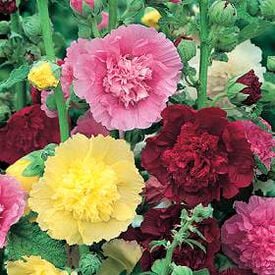
Carnival Mix comes in 4 vibrant shades, with big semi- to fully-double flowers that arise all along tall, sturdy stalks beginning just 4 months from sowing. An annual Summer Carnival Hollyhock is a long-blooming, very colorful series so garden-worthy that it received an AAS Award. Tall and stately, it blooms all summer for a rich display of big powderpuff blossoms in every shade of pink, rose, red, and yellow.
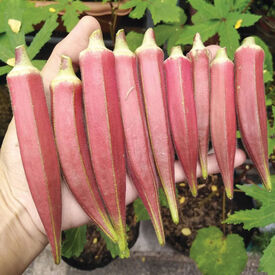
A high yielding producer of uniform, red okra. Harvest while young for small, deep red pods or wait for larger semi-pink pods. Fast-maturing at 51 days with stalky, upright plants. Produces edible flower with pink petals.