
Pepper Guide
Hot Pepper Comparison Chart
Compare every hot pepper we carry side by side, from mild roasting chiles and jalapeños to cayennes, habaneros and the hottest superhots. Varieties are grouped by type and sorted by days to maturity. Tap any variety to see full details and order seed.
Jalapeño & Serrano
Everyday heat for salsa, poppers and pickling. Pick green for crunch or let them ripen for sweeter, hotter fruit.
mildRoasting & Stuffing
Anaheim, Big Jim, poblano and wax types with gentle heat and thick walls for roasting, chiles rellenos and frying.
dryingCayenne & Thai
Slender, thin-walled chiles that dry easily for flakes, powder and hot sauce.
very hotHabanero & Superhots
Fruity, aromatic and fierce. Slow to ripen, so start seed early indoors and wear gloves at harvest.
Heat Scale (Scoville heat units)
Jalapeño & Serrano
| Variety | Days | Color (unripe → ripe) | Fruit Size | Heat | Disease Resistance |
|---|---|---|---|---|---|
| 62 | Green → Red | 3–4" | Mild | — |
|
| 65 | Green → Red | 3–4" | Medium | — |
|

|
70 | Green → Red | 4–5" | Medium | — |
| 70 | Green → Yellow | 2–3" | Medium | — |
|
| 70 | Green → Orange | 2–3" | Medium | — |
|
| 70 | Green → Red | 5" | Medium |
PVYN
|
|
| 70 | Green → Orange | 2–3" | Medium | — |
|

|
75 | Black → Red | 3" | Medium | BLS |
| 75 | Green → Red | 3–4" | Medium | — |
|
| 75 | Green → Red | 3–4" | Medium | — |
|
| 85 | Green → Red | 3–4" | Hot | PVY |


Roasting, Stuffing & Wax
| Variety | Days | Color (unripe → ripe) | Fruit Size | Heat | Disease Resistance |
|---|---|---|---|---|---|

|
66 | Yellow → Red | 4–5" | Mild–Medium | — |
| 70 | Cream → Red | 2" | Mild | — |
|
| 72 | Green → Red | 9" | Medium | TMV |
|

|
72 | Yellow → Red | 6–8" | Medium–Hot | — |
| 73 | Yellow-green → Red | 3–4" | Mild | — |
|
| 75 | Green → Red | 8–10" | Mild | — |
|

|
75 | Green → Red | 8–12" | Mild | — |

|
75 | Black → Red | 2–3" | Medium | — |
| 76 | Dark green → Red | 4–6" | Mild | — |
|
| 77 | Green → Red | 5–8" | Mild | — |
|

|
77 | Green → Red | 5–8" | Mild | — |

|
80 | Green → Red | 5–8" | Mild | — |

|
85 | Green → Red | 5–6" | Mild | — |
| 95 | Dark green → Brown | 4–6" | Mild | — |


Cayenne & Drying Chiles
| Variety | Days | Color (unripe → ripe) | Fruit Size | Heat | Disease Resistance |
|---|---|---|---|---|---|
| 65 | Green → Red | 4–6" | Hot–Very Hot | — |
|

|
70 | Green → Red | 4–5" | Medium–Hot | — |
| 75 | Green → Red | 5" | Very Hot | — |
|

|
75 | Green → Red | 2–3" | Very Hot | — |
| 85 | Green → Red | 2–3" | Hot | — |
|

|
85 | Green → Yellow | 3–5" | Very Hot | — |

|
88 | Green → Red | 4–6" | Very Hot | — |
| 88 | Green → Red | 4–6" | Very Hot | — |
|

|
95 | Green → Red | 3–6" | Medium–Hot | — |

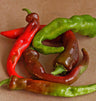


Start early, handle with care
Days to maturity are counted from transplanting to ripe fruit. Habaneros and superhots need a long, warm season, so start them indoors 8–10 weeks before your last frost. Wear gloves when picking and cutting the hottest varieties, and keep hands away from your eyes.
Thai, Specialty & Ornamental
| Variety | Days | Color (unripe → ripe) | Fruit Size | Heat | Disease Resistance |
|---|---|---|---|---|---|
| 55 | Lime → Red | 1–2" | Very Hot | — |
|
| 65 | Green → Red | 5" | Hot | TMV |
|
| 67 | Green → Red | 1½" | Hot | — |
|
| 70 | Green → Red | 2–4" | Very Hot | — |
|

|
75 | Green → Red | 4–6" | Medium–Hot | — |
| 75 | Green → Red | 1–2" | Very Hot | — |
|

|
77 | Violet → Red | 6" | Very Hot | — |

|
78 | Green → Orange | 2–3" | Hot | — |
| 80 | Multicolor | 2–3" | Very Hot | — |
|
| 90 | Mixed colors | 2–8" | Mild–Very Hot | — |
|
| 90 | Green → Peach | 2–3" | Very Hot | — |
|
| 90 | Green → Red | 2–3" | Very Hot | — |
|
| 100 | Green → Yellow | 2–3" | Very Hot | — |


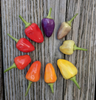


Habanero & Scotch Bonnet
| Variety | Days | Color (unripe → ripe) | Fruit Size | Heat | Disease Resistance |
|---|---|---|---|---|---|
| 95 | Green → Chocolate | 2–3" | Very Hot | — |
|
| 95 | Green → Peach | 2–3" | Very Hot | — |
|
| 95 | Green → Red | 1–2" | Very Hot | — |
|
| 100 | Green → Red | 3" | Very Hot | — |
|
| 100 | Green → Orange | 2–3" | Very Hot | — |
|
| 105 | Green → Red | 2–3" | Very Hot–Extreme | — |


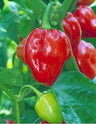
Superhots
| Variety | Days | Color (unripe → ripe) | Fruit Size | Heat | Disease Resistance |
|---|---|---|---|---|---|
| 100 | Green → Chocolate | 2–3" | Extreme | — |
|
| 100 | Green → Red | 1" | Extreme | — |
|
| 100 | Green → Red | 3–4" | Extreme | — |
|
| 100 | Green → Red | 2–3" | Extreme | — |
|
| 105 | Green → Red | 3–4" | Extreme | — |
|
| 105 | Mixed colors | 2–3" | Extreme | — |
|
| 105 | Green → Cream | 3–4" | Extreme | — |
|
| 110 | Purple → Red | 3–4" | Extreme | — |
|
| 110 | Green → Yellow | 3–4" | Extreme | — |


Disease Resistance Codes
Heat levels are ranges from our variety listings; actual heat varies with weather, soil and ripeness, and fruit picked red is usually hotter than green. Fruit size is a typical value from breeders and seed trials. A dash (—) means no resistance is published for that variety.